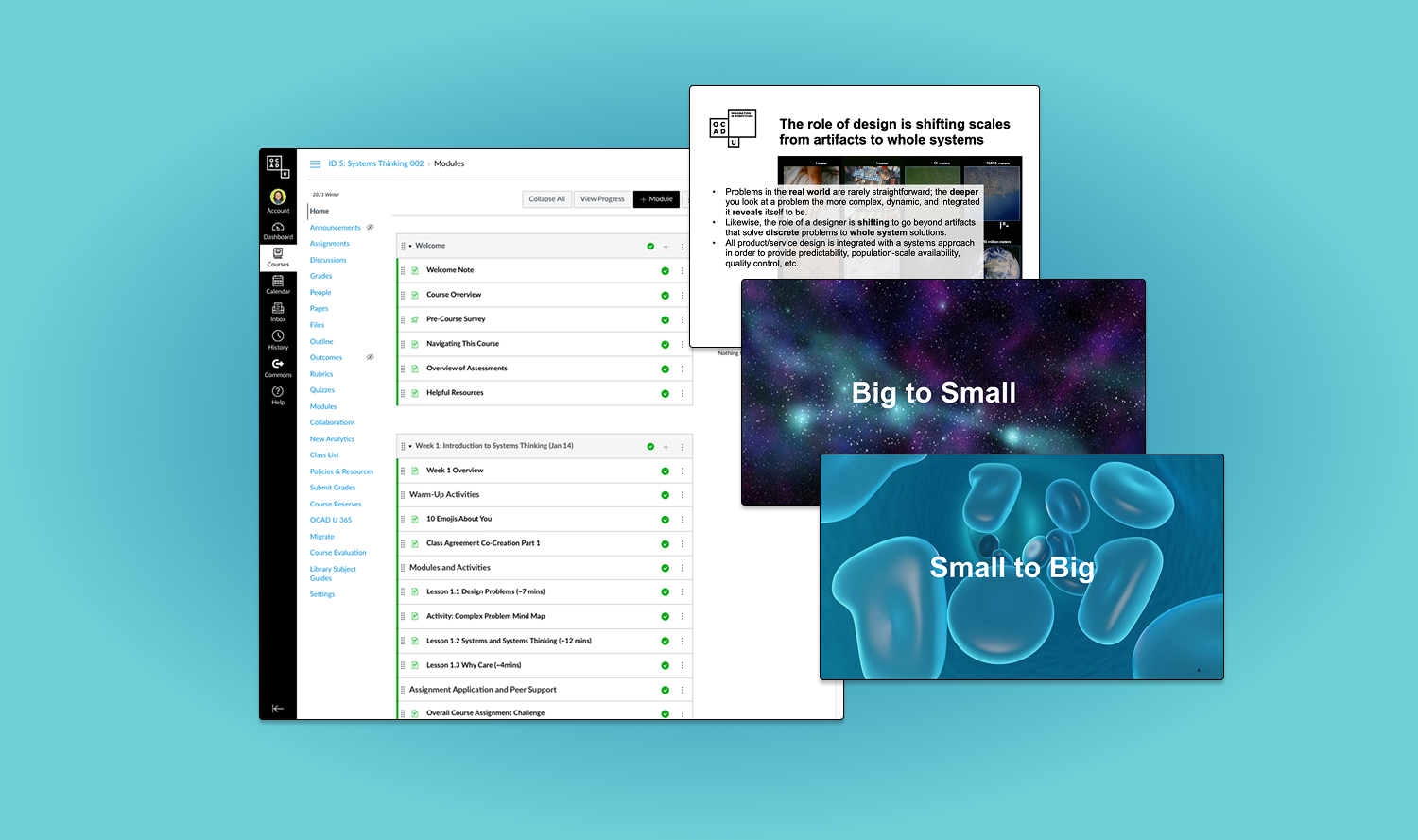
Developed and taught a 12-week undergraduate course at OCAD University on systems thinking for 3 terms, equipping 70+ students with frameworks for analyzing and navigating complex, real-world problems. (2019-2021)
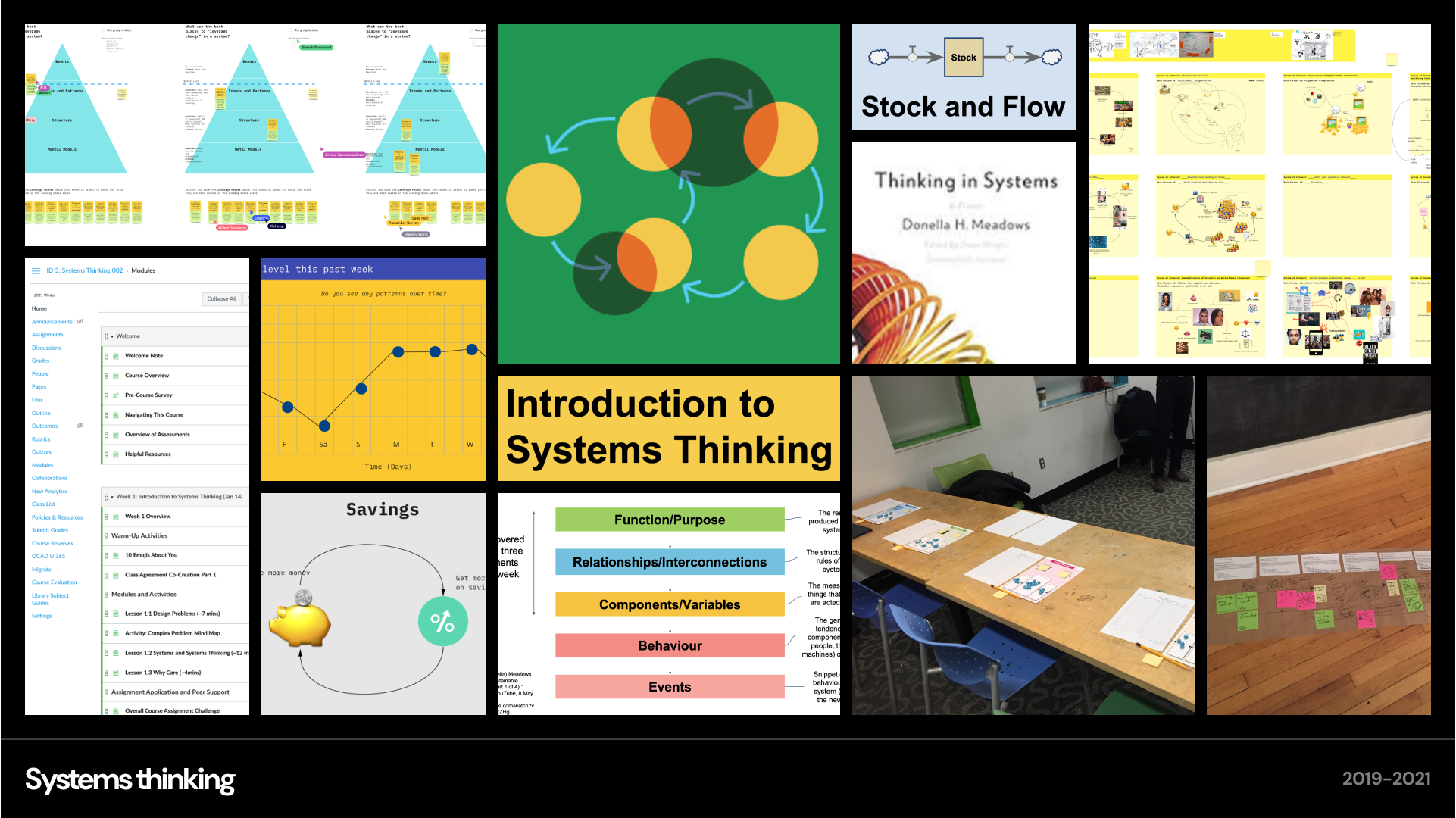
Systems thinking is a way of investigating how things are interrelated and part of a whole, encompassing concepts, mindsets, tools, and methods for analyzing complex problems. It's a thinking and simulation tool that quantifies matters that are real-world (social, economic, ecological, etc.), where the best solution is about picking between plausible scenarios and tradeoffs.
Meanwhile, design education is also in the business of finding and solving problems by applying the design process and creating outputs through hands-on creative skills. Yet there's an emphasis on the solution side because that aligns better with a designer's strengths and interests. But the ability to sit with open-ended, ill-defined situations surrounding a problem and trying to understand them more deeply before moving into solutions can help designers narrow down the design scope and point designers towards solutions that are grounded in reality. This is where systems thinking and design education intersect.
After years of facilitating workshops related to design, I wanted to extend to teaching a full course. I jumped on the opportunity to be a sessional instructor at OCAD University on the topic of systems thinking. I was given latitude to develop the curriculum from the ground up, so my goal was to combine systems thinking theory with the design process, to empower designers to be more intentional and thoughtful about the upstream and downstream effects of the things they release into the world. I based the course on the foundations of systems theory. Donella Meadows's Thinking in Systems served as the foundation for the course. Layered on from there were design tools and methods (i.e. user research, visualizing information, prototyping) to incorporate the design process. I also introduced some topics around complexity science as a way to connect what we were doing to how other disciplines might be applying systems thinking differently.
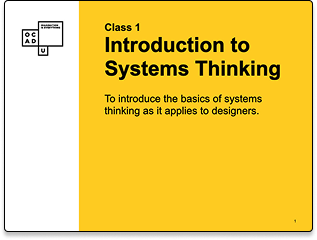
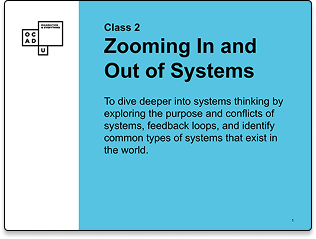
As a sessional instructor, I developed a course curriculum that introduced students to concepts and tools for applying a systems approach to complex problems. It was a 12-week course (3 hours each) with about 25 students. The first three classes focused on introducing key concepts of system thinking: components, relationships, and feedback loops (cause-and-effect). Then we moved on to communicating systems in visual ways through causal loop diagrams and stock and flow diagrams. Weeks 5-8 shifted from analysis mode to system interventions. Finally, the last few classes looked at how we can proactively identify possible downstream effects of our solutions. I iterated on the course for three years and prepared a fully virtual version during the COVID pandemic, making adjustments to ensure that students who were remote and in different time zones could still participate.


I noticed that it was hard to distinguish between cause-and-effect (feedback) vs. steps in a journey. Designers were usually taught to map out user experiences in a more linear way. What I did differently was spend more time exploring feedback loops in an interactive way using digital whiteboards where students created causal loop diagrams based on topics of their own interest.
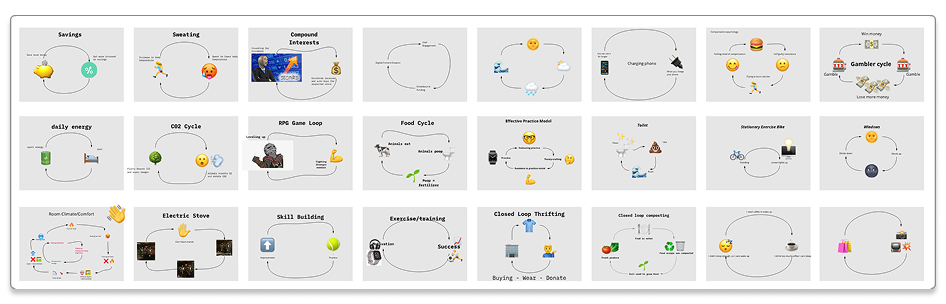
Giving students a shared place to write reflections after each class helped students be more active in their learning and stay on track. Students were given a small grade percentage for their weekly participation as a way to demonstrate that they were following along and progressing each week.
I realized how complicated it is to actually change a system. It's easier said than done. Once complex systems are an everyday part of our lives, it would cause a lot of distress if we tried changing it, even if it was with a good intention.
Something I found interesting in this week's lessons was the mention that we cannot fully represent reality within a system diagram. We can try our best to break down and simplify the world around us, but there will always be areas of nuance that cannot be covered.
In starting to think about feedback loops I've gained a sudden awareness of just how many things are in dialogue with one another.
I almost forgot how fun it could be to quickly prototype with a group of people all giving each other ideas. I think this week was a good reminder not to get too invested in your first idea, and to spend time going through low fidelity exploration to find the right fit for a project.
Adapting to virtual participation was really important during COVID. Digital boards allowed students to participate in activities at their own pace and still engage in individual and peer learning.
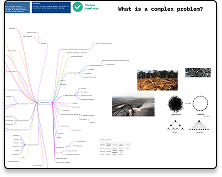
Activity: Brainstorm what is a complex problem by writing down words or images to describe a complex problem.
Facilitation method: Everyone in class contributed together to the same board (async students added on after) and shared afterwards.
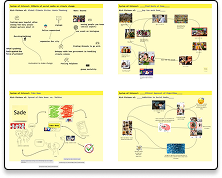
Activity: Creating "Rich Pictures" to explore a problem situation related to each student's system of interest.
Facilitation method: Students worked individually on different boards and then shared out afterwards.
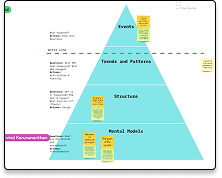
Activity: Learning more about system leverage points by trying to plot them on an iceberg model.
Facilitation method: Students worked in smaller breakouts of 2-4 so that they could have more intimate discussions. Space was provided with templates for async students.
The course received positive feedback from students and other instructors because it gave them a concrete set of tools and vocabulary for talking about how things relate. There were a variety of different systems topics that students explored, from package delivery in condos to fake news, but they shared a common method for defining the system elements, interconnections, and purpose. The approach resonated beyond the classroom and I was nominated by a student for a faculty teaching award.